
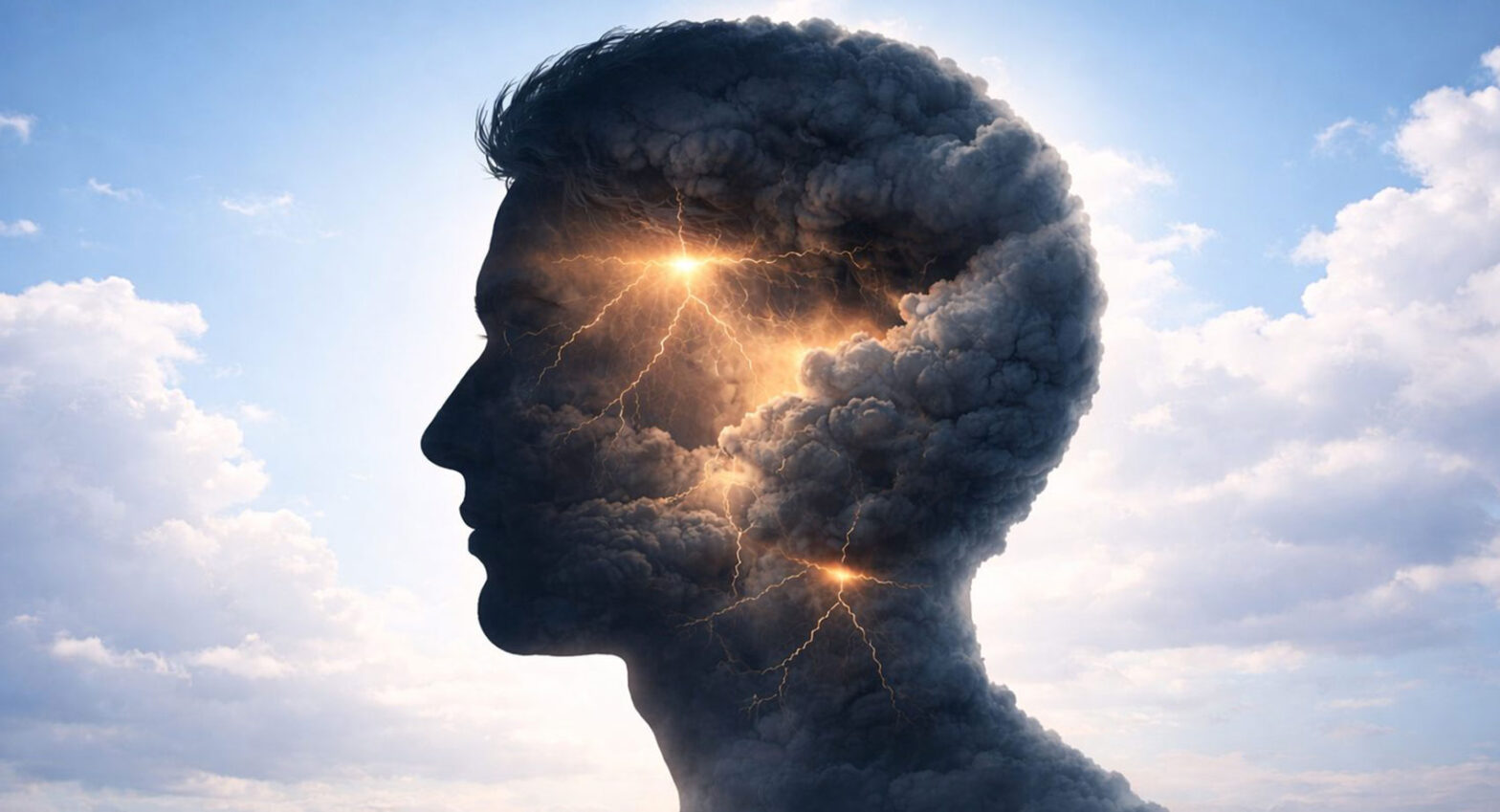
The War Outside Is Never The Real War.
We have been fighting wars since the beginning of recorded human history.
The Mahabharata documented the most devastating war ancient India ever witnessed. 18 days of battle on the plains of Kurukshetra. 18 million human beings dead. An entire civilization brought to the edge of annihilation. And at the end of it, when the last arrow had fallen and the last warrior had collapsed on blood soaked ground, the victor sat on his throne and wept. Because Yudhishthira understood something that the world has never fully learned in the thousands of years since.
The war had solved nothing.
The wounds would outlast the warriors. The trauma would pass to the children. The divisions would harden into history. And the consciousness that had produced the war, the ego, the fear, the hunger for domination, the inability to tolerate another’s prosperity, would survive perfectly intact. Ready to produce the next war. In the next generation. In the next century.
This has been the pattern of human civilization for five thousand years.
And it is the pattern playing out right now. Today. In real time. On every screen on earth.
I. What Wars Actually Cost
Before we speak of causes and cures let us first look honestly at what war actually costs. Not the official numbers. The full accounting that history rarely completes.
World War 1. The war that was supposed to end all wars. More than 20 million dead. 20 million more permanently disabled. Limbs shattered. Minds broken. An entire generation of young men consumed by trenches and mustard gas and the mechanized efficiency of industrial killing. And within twenty years of its ending another war had begun. Larger. More lethal. More comprehensive in its destruction.
World War 2. The deadliest conflict in human history. Between 70 and 75 million human beings died. Not soldiers alone. Civilians. Families. Children. Entire communities erased from the map. The Holocaust. Hiroshima. Nagasaki. Dresden. Leningrad. The names of the places where human beings were destroyed on an industrial scale are now taught to children in history classes as if the lesson has been learned.
It has not been learned.
On August 6 1945 the first atomic bomb fell on Hiroshima. Between 80,000 and 140,000 people died. Not over months or years. In a single morning. In a single flash of light that burned shadows of human beings into stone walls. The survivors carried radiation in their bodies for the rest of their lives. Their children carried its consequences. Research now shows that the trauma of war is not just psychological. It is biological. It passes through generations. In altered stress responses. In changed gene expression. In the bodies of people who were not yet born when the bomb fell.
Robert Oppenheimer built that bomb. And watched its first test in the New Mexico desert. And quoted the Bhagavad Gita.
Now I am become Death. The destroyer of worlds.
He spent the rest of his life quietly asking the question that the Gita had already answered 5000 years before him. What must a human being become on the inside before they can be trusted with this kind of power on the outside.
We never answered that question. And the weapons are still here.
Death as a result of wars is simply the tip of the iceberg. The other consequences, including endemic poverty, malnutrition, disability, economic and social decline and psychosocial illness, persist for generations.
II. Wars Do Not End. They Transform.
This is what the official history never captures and what the lived reality of every war affected population knows intimately.
Vietnam ended in 1975. But the chemical agents dropped on its forests contaminated soil and water for decades. Children born years after the war ended were born with deformities traceable to Agent Orange. The trauma of Vietnamese families passed silently through generations. Studies show that children who grew up in post war Vietnam had significantly lower chances of surpassing their parents educationally and economically than children who grew up in peace. The war ended. Its consequences did not.
Iraq went through the Iran Iraq war in the 1980s. Then the Gulf War in 1991. Then the 2003 invasion. Each war left its legacy in the next. The infrastructure destroyed. The institutions hollowed. The social fabric torn. The children growing up in the rubble of the previous generation’s conflict. In Iraq, absolute educational mobility was on an upward trend for more than two decades before the wars began. By 1968, more than 60 percent of young Iraqis surpassed the educational attainment of both their parents. After multiple wars, this rate declined back to around 35 percent.
War does not just kill the people fighting it. It kills the futures of the people who come after.
The transgenerational effects of war trauma are not just psychological but familial, social, cultural, neurobiological, and possibly even genetic. The child of a war survivor carries something in their nervous system that the war itself produced. The grandchild of a Holocaust survivor has been found to carry altered stress responses that were never their own experience but became their inheritance.
This is what is being built for the next generation right now. In every active conflict on earth. Not just the deaths counted in today’s news cycle. The trauma that will travel silently through families and communities for decades. The economic contraction that will limit opportunities for children not yet born. The psychological wounds that will express themselves as anxiety and depression and rage in people who never understood why they felt what they felt.
The world counts the dead. It rarely counts the full cost to the living. Wars are never truly over for the generations that inherit their consequences.
III. Where Every War Actually Begins
The Mahabharata is not a story about a war between two families fighting over a kingdom.
It is the most precise psychological case study of the origin of conflict ever written.
Duryodhana was not evil in the way that word is commonly understood. He was wounded. He watched his cousin Yudhishthira rule with grace and prosperity and felt something he could not bear. Envy. Rooted in the deepest possible misunderstanding of who he was. The belief that another’s greatness diminished his own. The conviction that his worth depended on domination. That the one who has more is the threat to the one who has less.
This is not ancient psychology. This is the operating system behind every conflict that has ever existed.
Fear. Ego. The desperate hunger for domination that emerges when a human being has no genuine inner foundation. When identity is built entirely on external power and external recognition. When the mind has never been examined. When consciousness has never been understood. When the human being does not know who they actually are beneath the role and the title and the territory.
Patanjali mapped this with surgical precision in the Yoga Sutras 2500 years ago. He called it Avidya. The fundamental ignorance of one’s own nature. Not stupidity. Not moral failure. A specific kind of not knowing. The not knowing of what you actually are at the deepest level. And from that not knowing arise the Kleshas. The afflictions. Ego. Craving. Aversion. Fear of annihilation. Each one a distortion that produces suffering. In the individual first. And then, when that individual has power over the lives of others, in the world.
Every war in human history is Avidya scaled to the size of the power available to express it.
The tribal chief with a sword produces a village conflict. The unexamined mind with nuclear capability produces something the Bhagavad Gita named with terrible accuracy. The destroyer of worlds.
Yogash chitta vritti nirodhah. Yoga is the stilling of the fluctuations of the mind. Patanjali understood that an unstilled mind is not just a personal problem. In the hands of power it becomes humanity’s most dangerous weapon.
IV. The Spiritual Crisis The World Will Not Name
What is happening in the world right now is not primarily a political crisis. Not primarily a geopolitical crisis. Not primarily an economic crisis.
It is a spiritual crisis.
And I use that word with complete precision. Not as vague aspiration. As the diagnosis that the situation demands.
Spirituality in its truest sense is not religion. It is not ritual. It is not belief in any doctrine or deity or institution. It is the direct, personal, lived recognition of what a human being actually is. Of the consciousness that looks out through every pair of eyes that has ever opened on this earth. Of the awareness that is identical in every human being regardless of nationality, religion, race, ideology or political affiliation.
When enough human beings in positions of power have lost contact with that recognition. When the inner life has been completely neglected in favor of the outer accumulation of wealth and territory and influence and dominance. When the mind that drives civilization has never been examined, never been trained, never been brought face to face with its own nature. This is the result.
Memorials built for wars that produced more wars. Treaties signed by the same unexamined consciousness that produced the conflict. Children inheriting the wounds of parents who inherited the wounds of grandparents who were never given the tools to heal.
The world has tried every outer solution. Military alliances. International law. Nuclear deterrence. Economic interdependence. Peace treaties. Sanctions. Diplomatic frameworks. Each one a genuine effort. Each one limited by the same fundamental gap.
They address the behavior of the unexamined mind. Not the mind itself.
The Shiva Sutras open with three words. Chaitanyam Atma. Consciousness is the Self. If this were genuinely understood by those who hold power over other people’s lives, the calculus of conflict would change completely.
V. What Healing Human Minds Actually Means
I want to be clear about what I am saying and what I am not saying.
I am not saying that inner development alone will stop the wars currently happening. The immediate reality of active conflict requires immediate human and diplomatic response. People being bombed need shelter not philosophy. Children being displaced need safety not sutras.
But I am saying this clearly. Every war that has ever happened was produced by the same root cause. The unexamined human mind given power over the lives of others without the inner development required to wield that power wisely. And every approach to peace that does not address that root cause is treating the branch while leaving the root intact.
What healing human minds means in practice is not complicated. Ancient India mapped it precisely. Patanjali’s Yoga Sutras. The Yamas and Niyamas. The inner curriculum that teaches a human being to know themselves before they claim to know what is right for others. To examine their own fear before they project it onto the world as an enemy. To understand their own ego before they allow it to scale into ideology. To recognize their own consciousness before they fail to recognize it in the human being on the other side of a border.
Ahimsa practiced genuinely means that violence begins to address itself at its actual source. In the mind. Before it ever reaches the hand. Before it ever reaches the weapon.
Satya practiced genuinely means that the propaganda which prepares populations for war becomes harder to sustain. Because the human being committed to truth cannot easily be given a narrative they have not examined.
Aparigraha practiced genuinely means that the insatiable hunger for domination that drives so many conflicts begins to lose its grip. Because the human being who knows they are not what they possess cannot be moved to destroy another for the sake of possessing more.
These are not naive prescriptions. They are the conclusions of thousands of years of human beings who observed carefully what produces suffering and what produces peace. And mapped it with more precision than any political science textbook.
The world does not need more weapons treaties. It needs more inner science. The world does not need more summits where unexamined minds negotiate with each other. It needs enough human beings who have done sufficient inner work that they can no longer be easily moved to destroy what they love.
VI. The World We Could Still Choose
We may not live to see it.
I want to say that honestly. The change that inner development produces is not rapid. It is generational. It is the slow transformation of human consciousness that happens one examined mind at a time. One school that teaches stillness alongside mathematics. One generation of children who learn who they are before the world tells them who to hate.
But consider this.
Every generation since the Mahabharata has inherited a world shaped by the wars of the previous one. Every generation has built on the ruins and the trauma and the unhealed wounds that war leaves in its wake. And every generation has eventually, inevitably, found new reasons to repeat the pattern.
What if one generation. Not the whole world. Not every human being. Just enough. Chose differently.
Chose to do the inner work before reaching for the outer weapon. Chose to examine the fear before naming it an enemy. Chose to understand the ego before allowing it to write policy. Chose to recognize the consciousness in the stranger before deciding the stranger was less than human.
The nuclear weapons Oppenheimer built are still here. The capacity for civilizational destruction has only grown since 1945. But so has something else. The access to the inner science that could make the wisdom to wield this power responsibly genuinely possible. The Yoga Sutras are translated into every major language on earth. The Bhagavad Gita is available on every phone. The Upanishads are studied in universities from Mumbai to Munich to Massachusetts.
The map is not missing.
The willingness to use it is what has been missing.
Oppenheimer quoted the Gita when the bomb fell. The question the Gita was actually answering was not what happens when this power is used. It was what must a human being become before they can be trusted with it.
We still have time to answer that question.
Not with another treaty. Not with another summit. Not with another memorial built to promise never again.
With the only answer that has ever actually worked.
Go inward.
Find what cannot be bombed. Find what no weapon can reach. Find the awareness that is the same in you and in the human being you have been told is your enemy.
And then ask yourself honestly.
Is this still a war you want to fight.
The world our children inherit is being built right now. In every mind that goes unexamined. And in every mind that finally chooses to look.
The real war has always been inside. Every outer conflict is its shadow. And the only peace that has ever lasted is the peace that begins within a human being who has finally stopped running from themselves.
Sadhavi Khosla